


Workers' Compensation Billing Services for California Providers
Get paid the full OMFS amount on every workers' comp bill. California Billing Services prepares bills to DWC rules, tracks every RFA, files Second Bill Review and IBR before the deadlines close, and takes aged claims through lien recovery, so your staff stops chasing adjusters.
- Bills prepared to the DWC Medical Billing and Payment Guide and current OMFS
- SBR filings tracked against the 90-day window
- Electronic billing (ASC X12 837 with 275 attachments) to claims administrators
- HIPAA-compliant, BAA signed before we see any data
Why Workers' Comp Bills Go Unpaid in California
Most unpaid workers' comp bills aren't lost because the care wasn't owed. They're lost to a missed step in a system with fixed forms, fixed fees and fixed deadlines. These are the gaps we close:
| Where revenue leaks | What happens | The rule behind it |
|---|---|---|
| Billing before the claim is accepted | Bill is objected to or ignored while liability is undecided | Claims administrators have up to 90 days to accept or deny; up to $10,000 of treatment is payable during that time (Labor Code §5402) |
| No RFA, or an RFA never tracked | Treatment is denied as unauthorized | Non-emergency treatment needs a DWC Form RFA and a utilization review decision |
| Missing reports | Bill returned as incomplete; the payment clock never starts | The DWC Medical Billing and Payment Guide requires supporting reports such as the PR-2 |
| Wrong form or code set | Rejection on submission | California requires standard forms (CMS-1500, UB-04, NCPDP) and OMFS-valid codes |
| Underpayment posted as paid | Revenue silently written off | Payment below the OMFS maximum must be challenged by SBR |
| Missed SBR or IBR window | The right to dispute the amount is lost | SBR within 90 days of the EOR; IBR within 30 days of the SBR decision |
| Out-of-network treatment | Bill denied | The employer's MPN controls who may treat after the claim is reported |
| Liens filed late or never | Balance becomes uncollectible | Liens generally must be filed within 18 months of the date of service |
| Billing the injured worker | Compliance exposure and patient complaints | Providers may not bill the employee for a claimed WC injury (Labor Code §3751) |
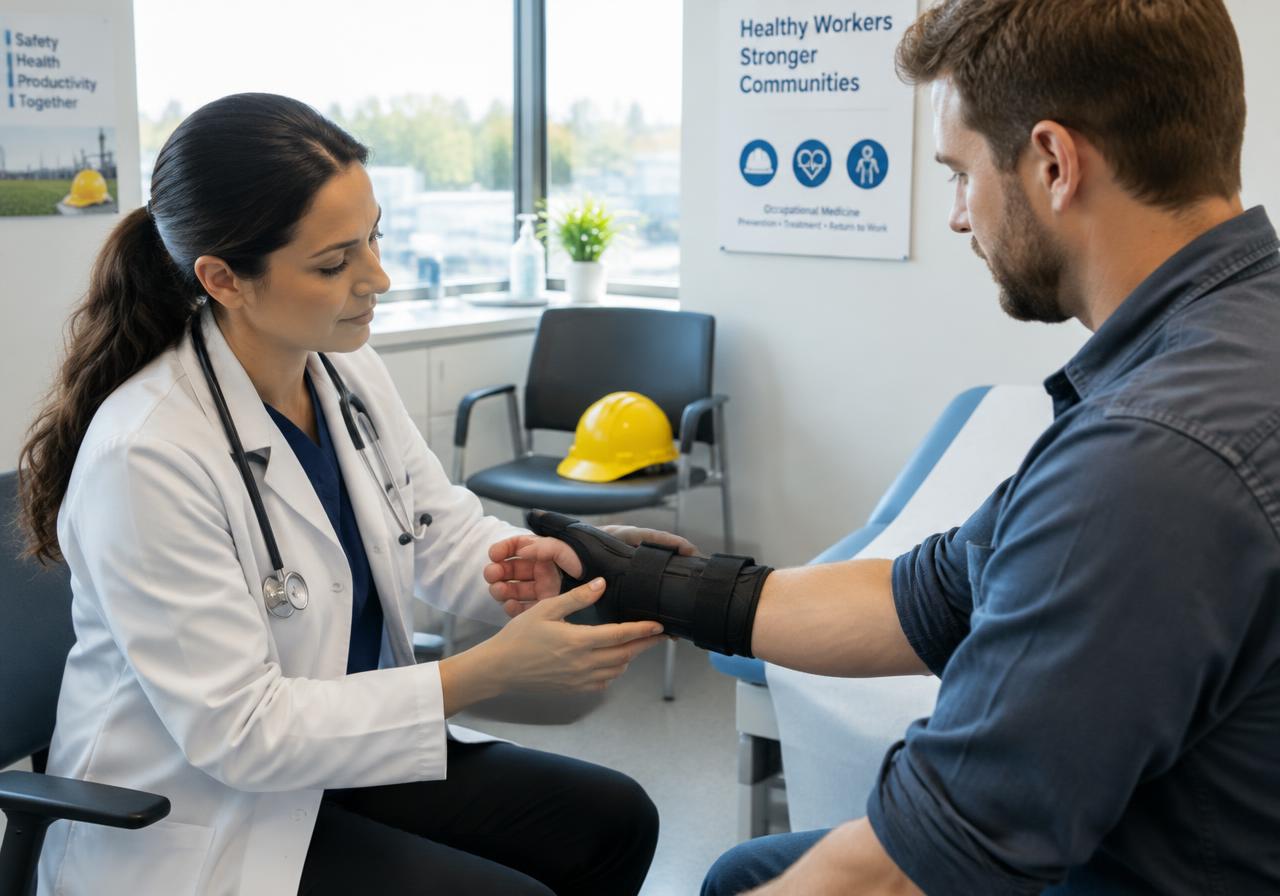
Built around injured-worker care
Every Workers' Comp Bill Starts at the First Visit
Claim number, adjuster, MPN and date of injury captured up front keep every later bill payable.
Our Workers' Compensation Billing Services
California Billing Services runs the full workers' comp revenue cycle, or just the part you need, from the first visit to the final payment.
| Service | What we do |
|---|---|
| Claim and payer verification | Confirm the claim number, claims administrator, adjuster, date of injury, accepted body parts, claim status and MPN before the first bill |
| Authorization (RFA) tracking | Send DWC Form RFAs with supporting reports, track UR decisions, and flag denials that need IMR so care and billing stay aligned |
| Coding and bill preparation | Code to OMFS rules for CPT, HCPCS and ICD-10-CM; attach PR-2s, operative notes and other required reports; prepare CMS-1500, UB-04 or NCPDP bills |
| Electronic billing | Submit through WC clearinghouses as ASC X12 837 with 275 attachments, and track acknowledgments |
| EOR and payment review | Compare every EOR and payment to the OMFS maximum, and catch underpayments and improper reductions |
| Penalty and interest recovery | Claim the statutory increase and interest when complete bills are paid late |
| Second Bill Review and IBR | File SBRs within 90 days and IBR applications within 30 days, with fee schedule calculations attached |
| Lien filing and recovery | File liens in EAMS, pay filing fees, prepare lien declarations, and negotiate resolution with defense and claims staff |
| Payment posting and A/R follow-up | Post line by line, follow up by aging and adjuster, and escalate stalled bills |
| Med-legal billing | Bill QME and AME evaluations, reports and testimony under the Med-Legal Fee Schedule |
| Reporting | Monthly WC dashboard: billed vs. OMFS, paid within the payment window, SBR/IBR outcomes, lien inventory and A/R by claims administrator |
Not sure how much WC A/R is recoverable?
California Workers' Comp Billing, Done to DWC Rules
California workers' comp is regulated by the Division of Workers' Compensation (DWC). Payment depends on following its rules exactly, and every bill we send is built to them.
Reports and forms that support payment
- DLSR 5021, Doctor's First Report of Occupational Injury or Illness: filed within 5 days of the initial exam.
- PR-2, Primary Treating Physician's Progress Report: required with each RFA, when the patient's status changes, and at least every 45 days.
- PR-4: documents permanent and stationary status at the end of treatment.
- DWC Form RFA: starts utilization review for non-emergency treatment.
We track which report each bill needs and hold bills that would go out incomplete, because an incomplete bill doesn't start the payment clock.
OMFS and MTUS
The Official Medical Fee Schedule (OMFS) sets the maximum payment for physician services, facilities, DME, pharmacy and other services. The physician fee schedule is based on Medicare's RBRVS with California-specific ground rules. We bill to the current OMFS and recalculate each payment against it.
The Medical Treatment Utilization Schedule (MTUS), based on ACOEM guidelines, defines what treatment is presumed reasonable. We match RFAs and documentation to MTUS criteria to reduce UR denials before they happen.
Utilization review and IMR
Utilization review generally must decide a prospective RFA within 5 business days of receipt, and no more than 14 days, or 72 hours when expedited. We follow up when decisions are late. When treatment is denied, we notify the provider and support the documentation for Independent Medical Review (IMR), which the injured worker requests.
E-billing and payment deadlines
| Bill type | Claims administrator must pay or object within | If paid late |
|---|---|---|
| Electronic bill | 15 working days of receipt | Statutory 15% increase plus interest |
| Paper bill | 45 days of receipt | Statutory 15% increase plus interest |
We bill electronically wherever the claims administrator accepts it, date-stamp every submission, and claim penalties and interest when payment is late.
Delayed and disputed claims
When liability is under investigation, the employer must authorize up to $10,000 of reasonable treatment for up to 90 days (Labor Code §5402). We track the claim's status, bill within the $10,000 limit while it's delayed, and move unpaid bills to a lien track if the claim is denied and later litigated.
MPN, HCO and treating physician rules
We confirm the provider is in the employer's Medical Provider Network (MPN) or Health Care Organization (HCO) and is the designated primary treating physician (PTP) before billing, because out-of-network bills are a common cause of denial.
Underpayments, Disputes and Lien Recovery
California has two separate dispute paths, and using the wrong one forfeits the claim. Disputes over the amount paid go through Second Bill Review and Independent Bill Review. Disputes over liability or medical necessity go to utilization review, IMR or a lien at the WCAB. We decide the path on day one.
Amount disputes: EOR → SBR → IBR
- Explanation of Review (EOR). We check every reduction against the OMFS maximum, the codes billed and the reports attached.
- Second Bill Review (SBR). We file within 90 days of the EOR with a written fee schedule calculation. The claims administrator must respond within 14 days.
- Independent Bill Review (IBR). If the SBR doesn't resolve it, we file with the DWC within 30 days of the SBR decision and pay the IBR fee, which the claims administrator reimburses if the provider prevails.
Liability disputes and WCAB liens
When a claim is denied, a body part is disputed, or treatment is still unpaid after the case goes to litigation, we protect the balance with a lien:
- Filed electronically in EAMS or through a jet filer, generally within 18 months of the date of service, with the $150 filing fee and the required lien declaration.
- Tracked through lien conferences and hearings at the WCAB district office handling the case.
- Negotiated with defense attorneys and claims staff, with every offer documented and approved by your practice.
Aged workers' comp A/R recovery
Inherited a backlog? We sort aged WC bills by their remaining rights: still billable, still appealable by SBR or IBR, lien-eligible, or past every deadline. Then we work the recoverable bills first, by dollar value and how close each one is to its deadline.
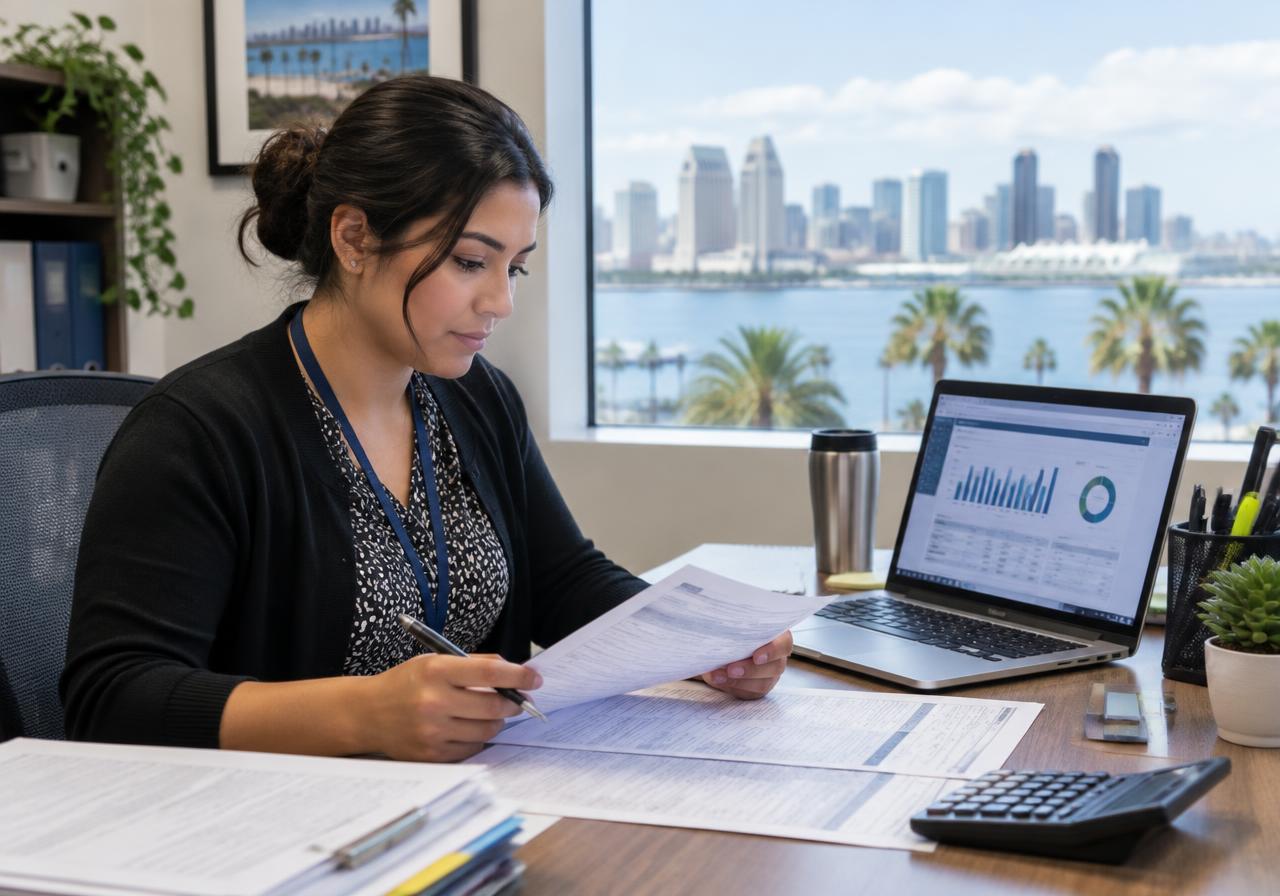
Fixed forms, fees and deadlines
Every Payment Checked Against the OMFS
We compare each payment to the fee schedule and the payment deadline before it is posted.
How We Get a Workers' Comp Bill From Visit to Payment
- Intake and verification. At the first visit, we capture the employer, claim number, claims administrator, adjuster, MPN and date of injury, and confirm whether the claim is accepted, delayed or denied.
- Authorization. We send the RFA with supporting reports and track the UR decision.
- Coding and bill build. We code to OMFS, attach required reports and choose the correct form.
- Submission. We send electronic bills once documentation is complete, and log acknowledgments.
- Payment check. We compare each payment to the OMFS maximum and the payment deadline, then flag underpayments, late payments and objections.
- Disputes. We file SBR and IBR for amount disputes, and liens for liability disputes, all on deadline.
- Posting and reporting. We post payments, adjust balances and report monthly by claims administrator.
Bill
Workers' Comp Billing by Specialty
Each specialty hits workers' comp rules differently. We set up billing around the ones that affect yours.
| Specialty | What we watch closely |
|---|---|
| Orthopedics and spine surgery | Surgical RFAs, global periods, assistant surgeon rules, implant and DME billing |
| Physical therapy and occupational therapy | The 24-visit cap per injury (Labor Code §4604.5) unless more visits are authorized, plus timed-code units |
| Chiropractic | The same 24-visit cap, MTUS criteria for continued care, PR-2 frequency |
| Pain management | Injection and procedure RFAs, MTUS Drug Formulary rules for medications |
| Occupational medicine and urgent care | First-visit capture, DLSR 5021 within 5 days, work status reports |
| Imaging and diagnostics | Authorization for MRI and EMG/NCS, professional vs. technical components |
| Ambulatory surgery centers | UB-04 facility billing under the OMFS ASC fee schedule |
| Psychiatry and psychology | Psych RFAs, report-heavy claims, frequent liability disputes |
Med-legal billing for QMEs and AMEs
Med-legal evaluations follow their own rules. We bill Qualified Medical Evaluator (QME) and Agreed Medical Evaluator (AME) evaluations, supplemental reports and depositions under the Med-Legal Fee Schedule's ML200-series codes. Every bill includes the required record-review page count and declarations. We follow up against the 60-day payment window for med-legal bills and take unpaid evaluations to SBR, IBR or a lien as appropriate.
Also treating auto accident patients? See our personal injury billing services.
Workers' Comp Billing Outside California
Every state runs its own workers' comp system, with its own fee schedule, forms, authorization rules and payment deadlines. We set up billing to the rules of each state where you treat. That includes, for example, Texas DWC billing rules, New York's workers' compensation board forms, and Florida's reimbursement manuals.
We also bill federal workers' comp programs, which follow federal rules instead of state ones:
- FECA: federal employees, administered by the Department of Labor's Office of Workers' Compensation Programs (OWCP)
- Longshore and Harbor Workers' Compensation Act: maritime workers
- Energy Employees Occupational Illness Compensation Program (EEOICPA): nuclear weapons and energy workers
For federal programs, we handle provider enrollment, authorization and billing through the OWCP's systems.
We serve providers across California, including:
Why Practices Choose California Billing Services for Workers' Comp
There are three ways to handle workers' comp billing: in-house, WC billing software, or a full-service billing company. Here's how they compare:
| In-house staff | WC billing software | California Billing Services | |
|---|---|---|---|
| Who does the work | Your team | Your team, with automation | Our WC billing specialists |
| OMFS and DWC rule knowledge | Depends on one or two people | Built into the software | Built into our process and applied by people who work WC every day |
| SBR, IBR and lien work | Often skipped for lack of time | Tools provided; staff still files | Done for you, on deadline |
| Adjuster and defense follow-up | Inconsistent | Alerts only | Scheduled follow-up on every open bill |
| Your other payers | Separate workflow | WC only | One team for WC, commercial, Medicare, Medi-Cal and PI |
| Cost | Salaries, training, turnover | Software subscription plus staff time | Percentage of WC collections, tied to results |
What you get with us:
- One team for every payer. Most WC patients also have health insurance, Medicare or PI claims. We bill them all, so nothing falls between vendors.
- California specialists. We're based in San Diego and work DWC rules daily.
- Full visibility. Monthly reports by claims administrator, plus access to the status of any bill.
- Clear engagement terms. Contract terms are confirmed in writing before work begins.
Workers' Comp Billing Pricing and Engagement Options
Choose the scope that fits your practice. Every option starts with a review of your current WC A/R.
| Option | Best for | How it's priced |
|---|---|---|
| Full workers' comp billing | Practices that treat injured workers every week | Percentage of WC collections, quoted in writing after your review |
| Aged A/R and lien recovery | A backlog of unpaid or underpaid WC bills | Contingency on amounts recovered, quoted in writing |
| SBR and IBR only | In-house billing teams that don't have time for disputes | Per filing or contingency |
| Med-legal billing | QMEs and AMEs | Percentage of med-legal collections |
Your quote depends on monthly bill volume, specialties, the age of your A/R, and how many claims are in litigation. We send it in writing after your review.
Workers' Compensation Billing FAQs
They cover claim verification, RFA tracking, OMFS-based coding and bill preparation, electronic submission, EOR review, SBR and IBR appeals, lien filing, payment posting and A/R follow-up. California Billing Services handles all of these, or just the parts you need.
Can't find what you're looking for? Contact our billing specialists
Every Month a Workers' Comp Bill Sits, a Deadline Gets Closer
SBR windows close at 90 days, IBR at 30 days, and lien rights at 18 months. Send us a list of your open workers' comp bills, and we'll show you which ones are still recoverable, what they're worth, and which deadlines come first.
California Billing Services, 600 W Broadway, Suite 700, San Diego, CA 92101
California Billing Services provides billing and collection services for healthcare providers. This page explains billing processes and is not legal advice.