


Independent pathology groups
We manage the full revenue cycle for private pathology groups, including global, professional and technical billing, payer contracting data and per-pathologist productivity reporting.
California Billing Services provides pathology billing for pathology groups, hospital-based pathologists and independent laboratories across California. Specimen-level coding, professional and technical components, immunohistochemistry, cytology and molecular claims are reviewed against documentation and payer requirements.
Discuss recent claims and accession data with our team to identify missing charges and underpayments. Please do not send patient information through the inquiry form.
AP
Anatomic pathology
CP
Clinical pathology
MolDX
Molecular test requirements
0 / TC
Professional and technical components
Pathology is billed by the specimen, the stain and the component, not by the visit. Surgical pathology coding reflects specimen type and complexity. Professional interpretation and technical processing must be assigned to the entity that performed each component.
Consider a GI case with three separately identified specimens: two routine specimens coded at 88305 and one more complex specimen at 88307, when the report supports those levels. If three single-antibody IHC stains are performed on one specimen, the example uses 88342 for the first and two units of 88341 for the others. Missing a specimen or antibody can leave documented work unbilled; code selection and units remain subject to current payer rules.
Illustrative coding example
Build the billing workflow around how your pathology business operates, whether you read slides, run tests or both.
We manage the full revenue cycle for private pathology groups, including global, professional and technical billing, payer contracting data and per-pathologist productivity reporting.
For pathologists covering hospital departments, we bill the professional component while the hospital bills the technical component under its outpatient payment. We also track coverage arrangements, frozen section call and clinical pathology consultations to identify missing professional charges.
We bill insurance, client and patient accounts for independent labs, including clinical lab tests paid under Medicare's Clinical Laboratory Fee Schedule and reference testing sent out with modifier 90.
We bill skin biopsies, special stains and immunohistochemistry for dermatopathology labs, and we coordinate billing with the dermatology practices that send them specimens.
We bill molecular pathology, genetic panels and proprietary lab analyses, register tests for MolDX Z-codes and manage the prior authorizations these high-value tests require.
We bill pathology for GI, urology and dermatology practices that run their own labs, applying the anti-markup rule and purchased-service requirements that apply when a practice buys an interpretation from an outside pathologist.
Revenue can slip away one specimen, one stain and one missing field at a time. A pathology claims review should look for these recurring gaps.
Multiple specimens billed as one, or complex specimens coded at a lower level than the report supports.
Special stains, IHC antibodies and ISH probes left off the claim or reported with the wrong units.
Global billing where only one component belongs to you, or a component never billed at all.
Noridian denies California Medicare molecular claims as unprocessable when the DEX Z-code is missing.
Tests on hospital outpatient specimens billed by the wrong entity, which leads to recoupments.
Missing insurance, diagnosis or ordering provider details that stall claims before they ever reach a payer.
Claims protected by AB 72 or the No Surprises Act accepted at low initial payments.
Accurate coding starts with the final pathology report and accession record: what was examined, stained and interpreted. The examples below require documentation and current payer-specific code review.
We assign surgical pathology codes 88300-88309 to each specimen by type and complexity, apply G0416 for Medicare prostate saturation biopsies, and add decalcification (88311) when it's documented. Reconcile documented specimens with appropriate billed units.
We report special stains (88312-88314), IHC (88342, 88341 and 88344), quantitative IHC for markers such as HER2, ER and PR (88360 and 88361), and ISH probes (88365-88377), counted per specimen and per antibody or probe as payers require.
We bill non-gynecologic cytology (88104-88112), fine needle aspiration adequacy and interpretation (88172, 88173, 88177) and gynecologic cytology, including Pap tests that need physician interpretation (P3001 and 88141).
We bill intraoperative consultations (88329) and frozen sections (88331 and 88332) by block, along with cytologic intraoperative exams when they're performed.
We bill flow cytometry technical services (88184 and 88185) and interpretation by marker count (88187-88189), plus bone marrow biopsies, smears and cytogenetic studies.
We bill clinical pathology consultations (80503-80506), blood smear interpretation, blood bank physician services and the clinical lab tests your lab performs, with CLIA-waived tests reported with QW and repeat tests with modifier 91.
We code molecular tests with the single correct Tier 1, Tier 2, PLA or unlisted code, register tests in the DEX registry to obtain Z-codes, and place each Z-code where Noridian requires it. Review required authorization and medical necessity documentation before billing.
We bill the professional component with modifier 26, the technical component with TC, or the global service, based on who owns the equipment, employs the staff and performs the interpretation for each account.
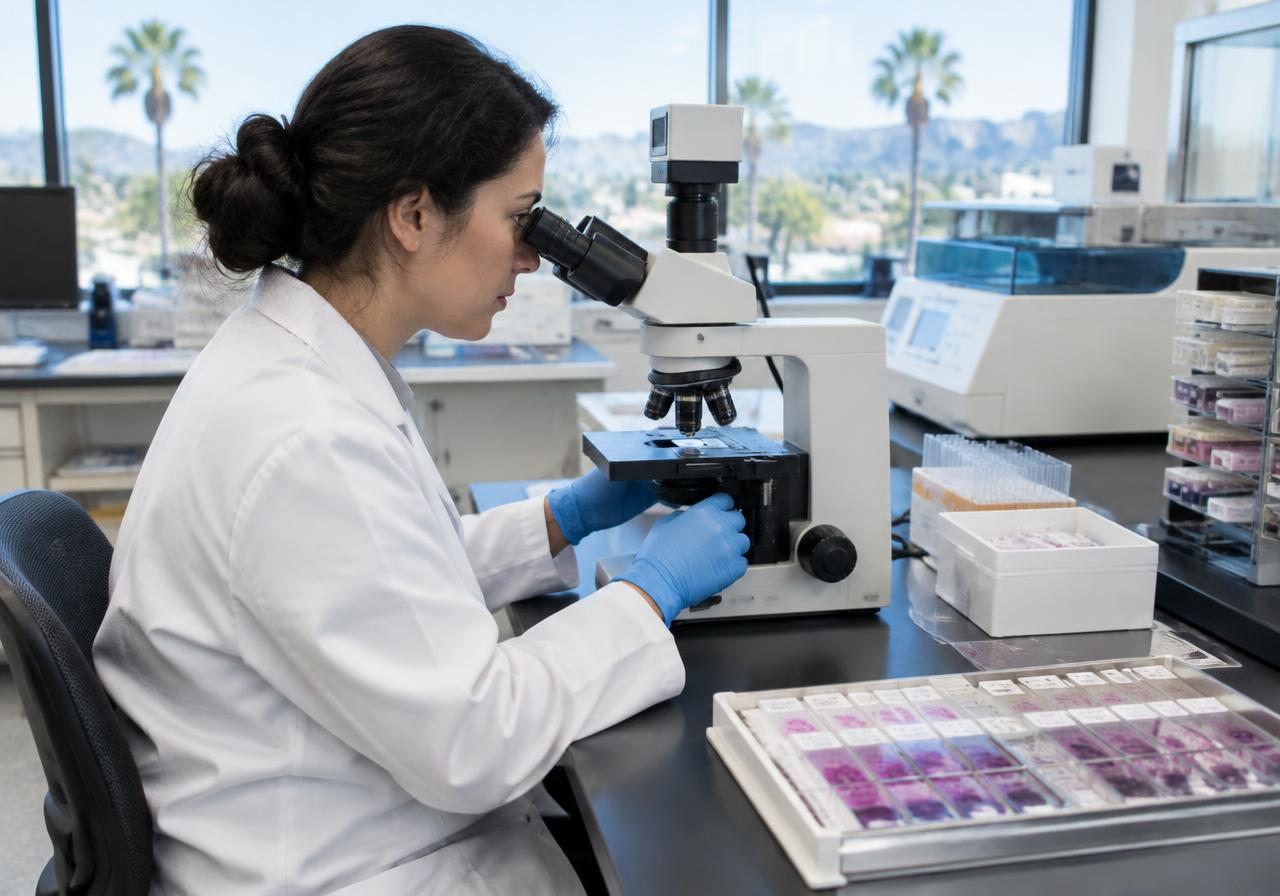
Built around the accession record
Connect the pathology report, specimen count and documented stains to the charges submitted for each accession.
Choose end-to-end billing or a defined scope of support, from requisition review through payment follow-up.
We review requisitions as they arrive and chase missing insurance, diagnosis and ordering provider details with the referring office before the claim is built. Most lab billing problems start here, so this is where we start.
We verify coverage for accessions, including Medi-Cal plan assignment, Medicare Advantage enrollment and secondary insurance, to identify the appropriate payer.
Explore serviceWe obtain authorizations for molecular, genetic and other high-cost tests from health plans and lab benefit programs such as eviCore and Carelon before testing is billed.
Explore serviceWe reconcile accessions in your LIS against billed charges to identify specimens, stains and tests missing from charges.
Explore serviceClaims are reviewed against NCCI edits, MUE unit limits, Noridian coverage policies, MolDX requirements and modifier rules, then submitted electronically.
We manage client bills to hospitals and physician practices under your client fee schedules, and split billing when one component goes to insurance and the other to a client.
We post payments line by line, compare them with your contracted and fee schedule rates, and appeal underpaid lines instead of writing them off.
We sort denials by root cause, such as medical necessity, missing authorization, frequency limits or bundling, correct the source and appeal with the pathology report and supporting documentation.
Explore serviceWe work open claims by balance and age, and we take over aged AR from your previous billing company during the transition.
Explore servicePatients often don't recognize a lab or pathology bill. We send clear statements that name the referring physician, answer billing calls and set up payment plans.
We enroll pathologists and laboratories with Medicare through PECOS, Medi-Cal through PAVE and commercial plans, and review CLIA certificate and California lab license details on payer files.
Explore serviceReporting can include collections by accession, test, pathologist, referring client and payer, plus denial rate, days in AR and underpayments recovered.
Explore servicePathology groups should assess MIPS eligibility, applicable quality measures and submission options for their reporting year. Cancer-reporting measures should match the practice’s case mix and documentation.
Discuss whether quality data can be captured during billing and submitted through claims or an appropriate registry, such as CAP’s Pathologists Quality Registry. Confirm reporting responsibilities and the scope of support before onboarding.
California adds laboratory licensing, Medi-Cal and surprise-billing requirements to Medicare and commercial payer rules. Each can affect claim readiness and payment.
California Medicare molecular claims follow Noridian Jurisdiction E and MolDX coverage requirements. Test registration, DEX Z-code placement and supporting medical necessity should be checked against the current policy for the specific test.
We bill Medi-Cal managed care plans and fee-for-service Medi-Cal, confirm each member's plan before billing and keep your lab's CLIA and state license information on file with each plan.
California requires a state clinical laboratory license from CDPH Laboratory Field Services in addition to a CLIA certificate, including for out-of-state labs that test California specimens. Check certificate and license status before billing; missing or expired credentials can affect enrollment and payment.
We follow each commercial plan's pathology and lab policies, including frequency limits, test coverage lists and the lab management programs some plans use for molecular and genetic testing.
Pathology is an ancillary service subject to California AB 72 and the federal No Surprises Act when their coverage conditions apply. Review plan jurisdiction, facility network status, payment methodology and dispute deadlines before pursuing an underpayment; state and federal pathways are not interchangeable.
Ask a prospective billing partner how it handles specimens, stains, components and molecular testing—not just how quickly it submits a claim.
Review these questions with our team using your practice’s workflow and claims requirements.
| Area to compare | In-house billing considerations | Outsourced scope to confirm |
|---|---|---|
| Pathology coding expertise | Hiring, training and backup coverage | AP, CP and molecular coding responsibilities |
| Accession reconciliation | Frequency and ownership of reconciliation | Agreed LIS-to-charge reconciliation process |
| MolDX and Z-code management | Registration and policy monitoring resources | Test registration, identifiers and claim review |
| Laboratory licensing and payer rules | Credential tracking and revalidation ownership | Defined enrollment and credential review scope |
| Staff turnover | Coverage during vacancies and leave | Assigned coverage and escalation process |
| Cost | Salaries, benefits, software and training | Quote, inclusions and any additional charges |
Agree responsibilities, access and timing before moving claims to a new billing team.
Review recent claims, payments and accession records to establish the current workflow and identify gaps.
Agree data safeguards, system access, LIS exports, EDI, ERA and payer enrollment responsibilities before work begins.
Assign responsibility for new accessions and existing claims with your current biller to avoid duplicate submission.
Move the agreed billing scope to the new team and establish the plan for aged accounts receivable.
Review reporting, unresolved claims and corrective actions on an agreed schedule.
Review the indicators that show how your pathology revenue cycle is performing, against your practice’s baseline and agreed reporting scope.
| Metric | What to review |
|---|---|
| Clean claim rate | Claims accepted without corrections or rejections |
| Denial rate | Denial frequency and root causes by payer and test |
| Days in accounts receivable | Time from billing to payment and aging trends |
| Net collection rate | Payments relative to collectible contractual amounts |
| Accession-to-claim reconciliation | Accessions, specimens and stains matched to billed charges |
Pathology and laboratory billing requires clear support for medical necessity, specimen counts and molecular testing. Review the records behind a claim as carefully as the claim itself.
Confirm access and export requirements for your LIS and billing platform before onboarding. Systems such as Epic Beaker, Sunquest, Cerner CoPathPlus, NovoPath, LigoLab and Orchard Harvest may provide structured accession, specimen and test data; compatibility and integration scope must be assessed for your configuration.
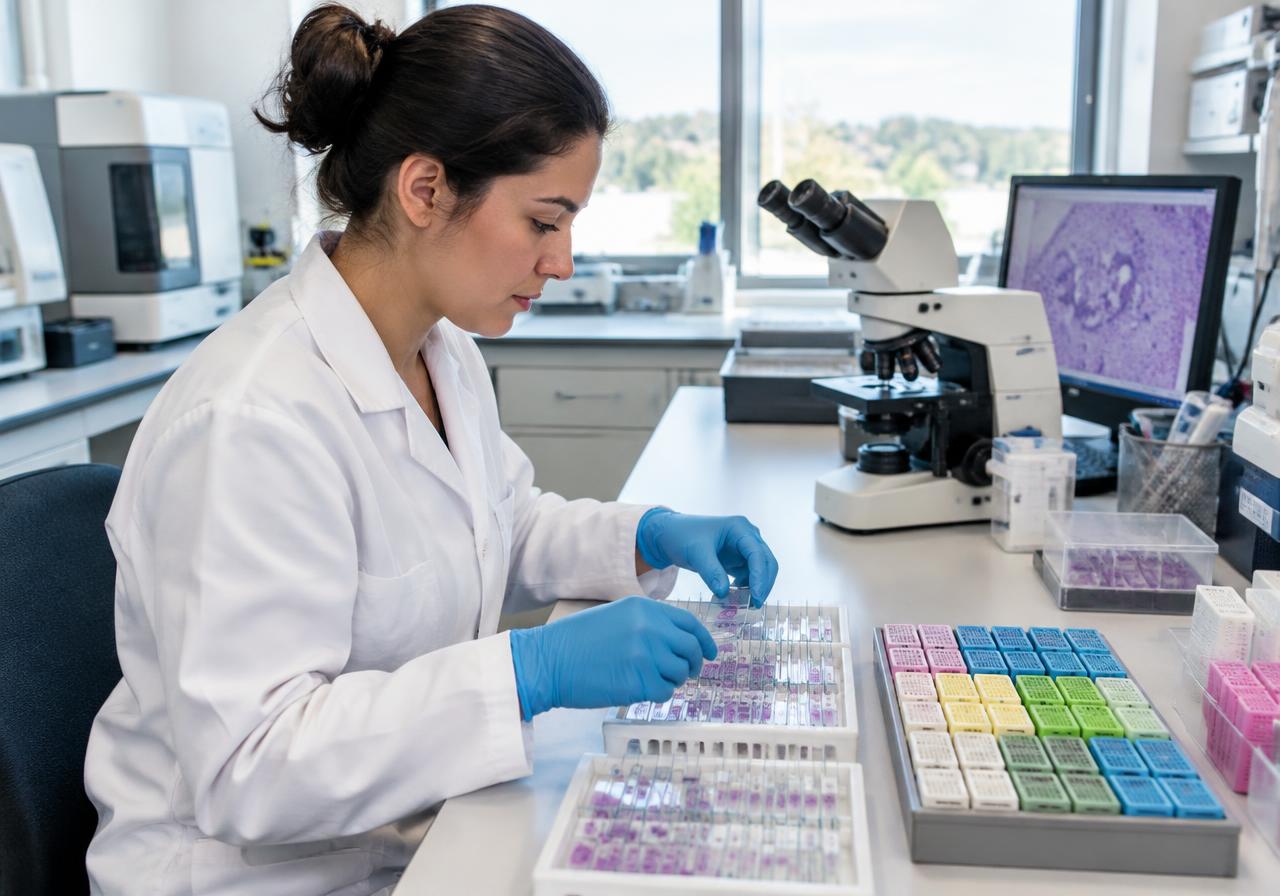
Accession-level visibility
Specimen records, billed charges and payment follow-up provide the detail needed to investigate missing charges and unresolved balances.
Pricing
Your quote depends on accession volume, payer mix, coding complexity and the services you choose. Discuss percentage-of-collections or per-claim arrangements, inclusions and any additional charges before signing.
Pathology billing support for California groups and laboratories, from biotech and genomics hubs to community hospital labs.
Los Angeles, Long Beach, Orange County, Irvine, San Diego, Carlsbad, Riverside and San Bernardino
San Francisco, South San Francisco, Oakland, San Jose, Palo Alto, Sacramento and Roseville
Fresno, Bakersfield, Modesto, Stockton and Visalia
See Los Angeles · San Diego · San Francisco · all locations.
Your next step
Discuss your pathology workflow with our team. A review can focus on missing specimens, stains, component assignment and underpayments, with scope and timing agreed for your practice.
Pathology billing services are the coding, claim submission and payment follow-up for anatomic, clinical and molecular pathology performed by pathologists and laboratories. They cover specimen-level coding, professional and technical component billing, client and patient billing, denials and appeals. California Billing Services provides these services for pathology groups and labs across California.
Can't find what you're looking for? Contact our billing specialists